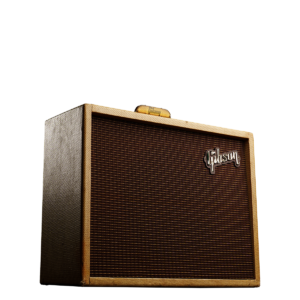
Amp Chronicles – A Journey Through Tone History
Explore the legacy of iconic amplifiers, decade by decade. From warm ’50s cleans to roaring ’80s crunch, these amps shaped the sound of music — and they live on in our captures. Use the options below to navigate by production year, manufacturer, or check out what’s been recently added to the collection.
1950
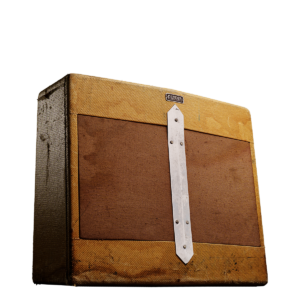
Fender Super Bass
The Super was Leo Fender's personal favorite — the circuit he kept tinkering with — and it was the first Fender ever to carry two speakers. You can spot a V-Front by the chrome stringer splitting its angled baffle between a pair of 10s. Powered by 6L6s, it's raw, woody early-tweed tone in its purest form, finger-jointed pine and all. A real piece of the Fender origin story.
1957
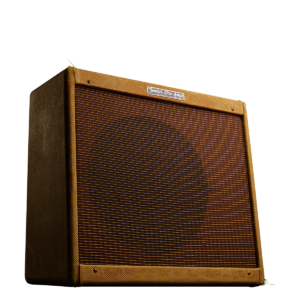
Fender Pro
Think of the Pro as the 5E3 Deluxe's bigger brother: same tweed soul, but a 26-watt 6L6 power section and a single 15-inch Jensen for real low-end heft and an upper-mid push that cuts. Fixed bias and a presence control make it tighter than the Deluxe, so it sails from creamy cleans into warm, woolly grit. A studio sleeper — Tom Petty leaned on one for years.
1957
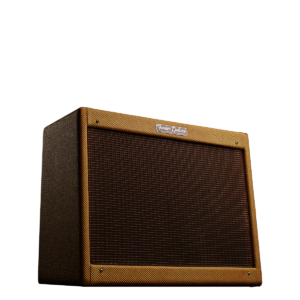
Fender Deluxe
The amp that defines tweed, and the most copied circuit in history. Just 15 watts from a pair of 6V6s, two interacting volumes and a shared tone — endlessly expressive. Push it and it blooms into that ragged, harmonically rich growl. Neil Young's whole sound lives here; so does Larry Carlton's 'Kid Charlemagne' solo and Billy Gibbons' early grit. Pure touch-sensitive magic.
1957
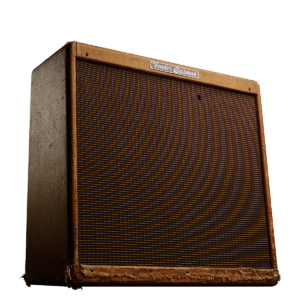
Fender Bassman
Built for bass, adapted by guitarists, and arguably the most important amp circuit ever made. The 5F6-A's four 10s and 45 watts of 6L6 gave Jim Marshall the blueprint he copied wholesale for the JTM45 — which became the Plexi, which became half the amps you love. Warm jazz, gritty blues, full-throttle rock 'n' roll: crank it and it simply rips. The Rosetta Stone of tube tone.
1957
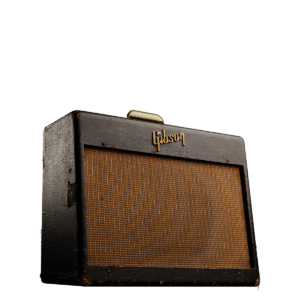
Gibson GA-6
A 1950s Gibson sleeper and a true rival to Fender's tweed Deluxe of the day. The GA-6 Lancer runs a pair of cathode-biased 6V6s for around 16 watts through a single 12, with a warm, woody midrange that turns gritty and vocal when pushed. Like all old Gibsons, it sings with P-90s. Simple, characterful, and criminally overlooked — a hidden gem of the Kalamazoo years.
1957
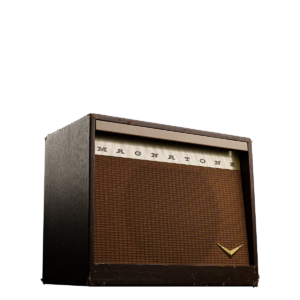
Magnatone Troubadour
Magnatone's answer to the tweed Deluxe, and a small-combo legend. The 213 Troubadour pushes around 18 watts from two 6V6s into a 12 — a woody, mellow voice that erupts into glorious crunch wide open. But the magic is the vibrato: Magnatone's genuine pitch-shifting warble, not Fender tremolo. Buddy Holly, Lonnie Mack, and Robert Cray all fell for it; lately Phil X revived it.
1958
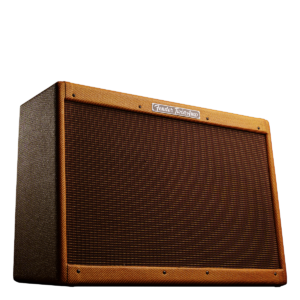
Fender High Powered Twin
Take a tweed Bassman, double the power tubes, swap in two 12s, and you've got the High-Powered Twin — the loud, lordly peak of the tweed era. 80-plus watts from a quad of 6L6s, but unlike the squeaky-clean Twins that followed, this one sags and snarls when you push it. Keith Richards, Eric Clapton and Joe Bonamassa rode its raw roar. The most coveted Fender tweed of them all.
1958
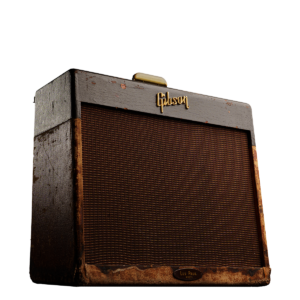
Gibson Les Paul
Gibson's flagship of the late '50s and early '60s — the amp built to partner the Les Paul guitar, and badged to match. This later tolex GA-40 traded 6V6s for a pair of 7591s, adding a touch more power and polish to that warm, midrange-rich Gibson voice, plus the lush onboard tremolo and a unique 'Voicing' control. Pair it with P-90s or humbuckers and it glows.
1958
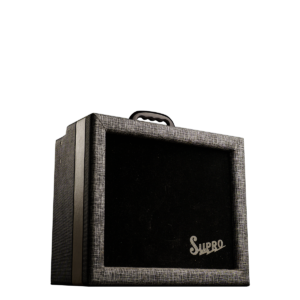
Supro Dual Tone
A beautiful sound reminescent of early Led Zeppelin. Jimmy Page tracked the first two Zeppelin albums through a Supro 1x12 combo, and the 1624T Dual Tone is that amp: 24 Valco-built watts from a pair of 6973 tubes, with lush tube tremolo and two linkable channels. Glassy at low volume, it turns to rich, harmonically loaded crunch when dimed — and sounds simply enormous miked up.
1960
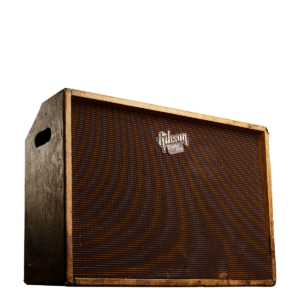
Gibson Rhythm King
Gibson's big gun — the Rhythm King. A 60-watt 2x12 powerhouse running a pair of mighty 6550s, it was conceived (much like Fender's tweed Bassman) with bass in mind, but guitarists soon discovered its enormous, fearless clean headroom. It stays tight and authoritative where smaller amps fold, with a deep, three-dimensional voice. One of the most muscular amps Kalamazoo built.
1960
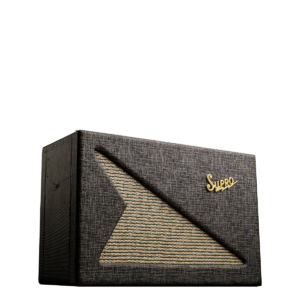
Supro Supreme
A streamlined slice of vintage Valco cool. The 1600R Supreme is a single-channel 1x10 putting out about 17 watts of meaty, gritty Supro tone, with that signature rat's-nest-wired Valco character. The 'R' marks it for use with Supro's outboard 600 Reverb unit, which tapped its output for watery spring sound. Raw and characterful — like what a young Hendrix would've cranked.
1961
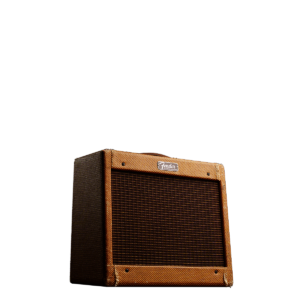
Fender Champ
Five watts, one 8-inch speaker, a single volume knob — and one of the most-recorded tones in rock history. The 5F1 Tweed Champ breaks up early into a raw, aggressive growl that miked up sounds enormous. Eric Clapton tracked the entire 'Layla' album through one; Joe Walsh and Keith Richards leaned on it too. Pure, simple, cranked-tweed magic in the smallest box Fender made.
Members only
Become a site member for free and gain access to our full amp history time line